
What If Your Doctor Was Never Taught Menopause?
Only 31% of U.S. OB-GYN residency programs include a formal menopause curriculum.

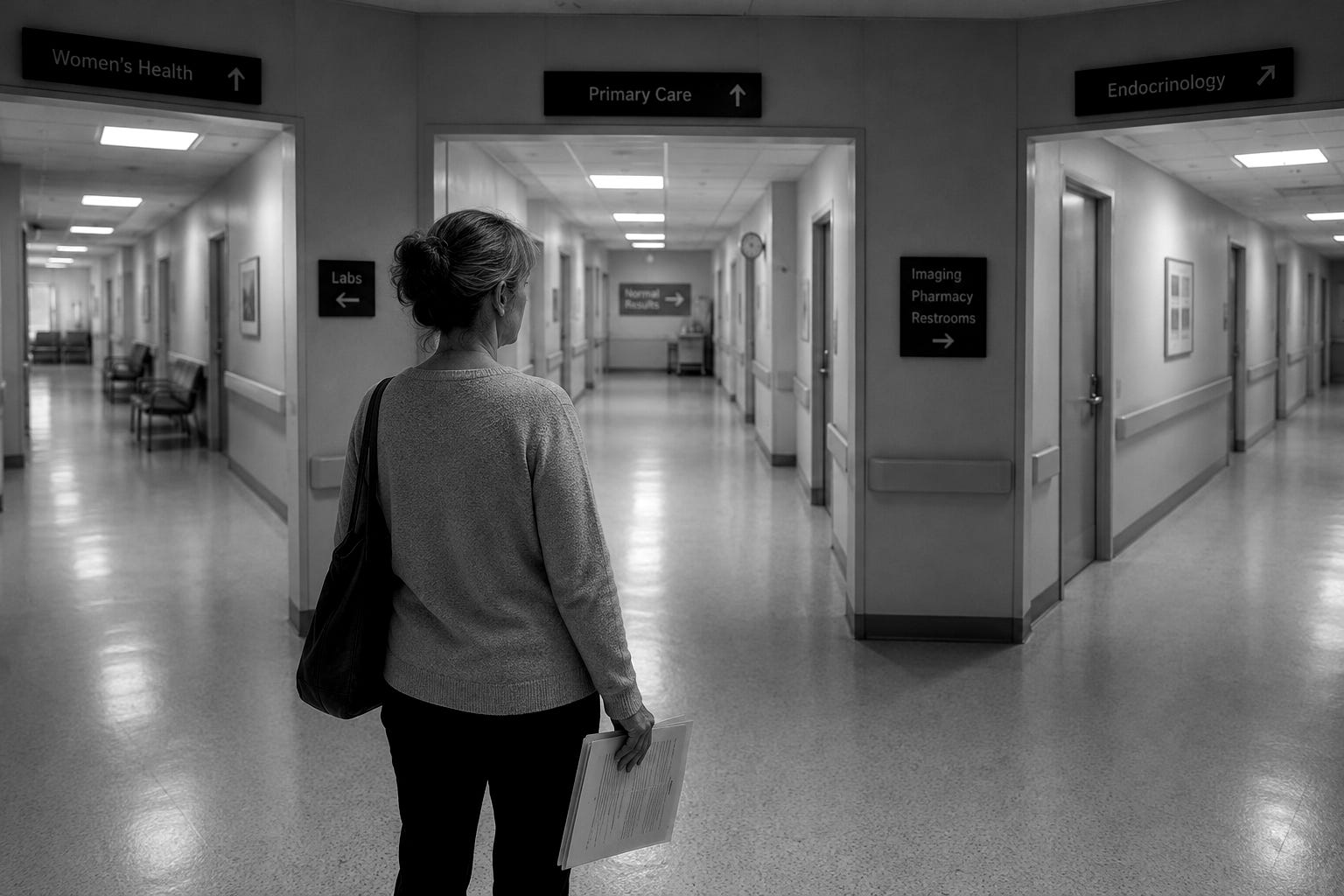
The menopause transition affects 51% of the population for approximately 40% of their lives. And yet the medical professionals that treat them are poorly prepared to do so. Even those who specialize in women’s health and medicine. Where formal training in the menopause transition is included it amounts to little more than a lecture or two. Less than 7% of residents in key specialties such as family medicine, internal medicine, and obstetrics and gynecology feel prepared to support menopausal patients.
The Frontline of Healthcare
These are the frontline of medicine. The physicians that women are most likely to interact with on a regular basis. Because of this lack of training, these clinicians are less likely to bring up midlife and menopausal care with their patients, including discussions of symptoms and any associated health risks. In one study 1/3rd of US counties reported lacking practicing OB/GYNs and where they did exist appointments were reportedly too short or not dedicated to discussing menopausal symptoms.
Even in big cities, where there are some dedicated programs, there is still a lack of specialized care, which often results in delayed or mis-diagnosis. What we see reported, time and again, from women is not only a lack of understanding but a lack of knowledge from their physicians. Women being told that they are just “aging” or that they are “too young” for perimenopause. My own wife was dismissed by four different OB/GYNs over a period of four years as not being perimenopausal, but rather given a shopping list of other reasons for feeling the way she did.
Awareness Isn’t Education
Information about the menopause transition is becoming more broadcast. From Oprah and Halle Berry to TikTok influencers and everyone in between, people are talking about it. But is the information reaching the intended audience? In this post -

I talked about the fact that in one survey 54% of women of menopausal age who said they weren’t or weren’t sure if they were in perimenopause still reported at least three symptoms.
So where are those women, who are unsure about their own health going to turn if they can’t get accurate information from the one source they should be able to get it from? A lot will turn to friends and family, to search engines, AI and Social Media. Some will just choose to “muscle through” and deal with it the best they can.
The Relationship Cost
With this lack of credible care and the “normal labs” approach to midlife and the menopause transition is it any wonder that where the strain is felt most for many women is at home? I talk about the “Connected Menopause” because it is experienced individually but lived collectively. A woman being dismissed by her doctor or being misdiagnosed isn’t experiencing that in a vacuum, there are partners, perhaps children, aging family members, work colleagues and friends who are all seeing the changes, sometimes subtle, sometimes not so subtle.
A woman who is told she is fine, but is living a different experience from “fine” might actually start to believe there is nothing wrong with her. I have had conversations with men whose partners refuse to see the changes that are happening to them. Not because they don’t want to see them but because they are being told they don’t exist by professionals.
The cost of this lack of care isn’t isolated to just a woman’s physical health. There is a mental cost too. And a partner trying to support this woman is going to find themselves even more lost. After all, what they are facing is a situation where they have to try to reconcile the reality they are living with and what their partner is being told by professionals. And if the professionals are right, and there is nothing wrong with their partner, then what does that mean for them?
This all goes to show that we are experiencing more than a women’s health issue, we are experiencing a healthcare education issue and one that awareness campaigns are fast outstripping. Until we see this gap closed women and their connections will try to close it on their own. That 15 minute conversation that is missed in the examination room now has repercussions that impact women and their partnerships for decades.
Want to add to the conversation. Leave a comment. I reply to them all.
This substack runs on copious amounts of tea. If you’d like to support it, you could always buy me a cuppa.
I appreciate this conversation. So many partners of women going through menopause are trying to do what they always do - fix something. While this approach has often helped in the past, it's much harder to do now because women aren't always sure what is wrong beyond the fact that they don't feel like themselves: they aren't sleeping, their anxiety is often on the rise, their energy levels are down, their bodies ache in new ways, and they have debilitating brain fog to name a few. Yet as you pointed out, their doctors tell them they are fine. Without knowing what exactly is wrong, it becomes impossible to find a viable solution both for women and their partners witnessing the many changes menopause brings.