

I live in a bubble.
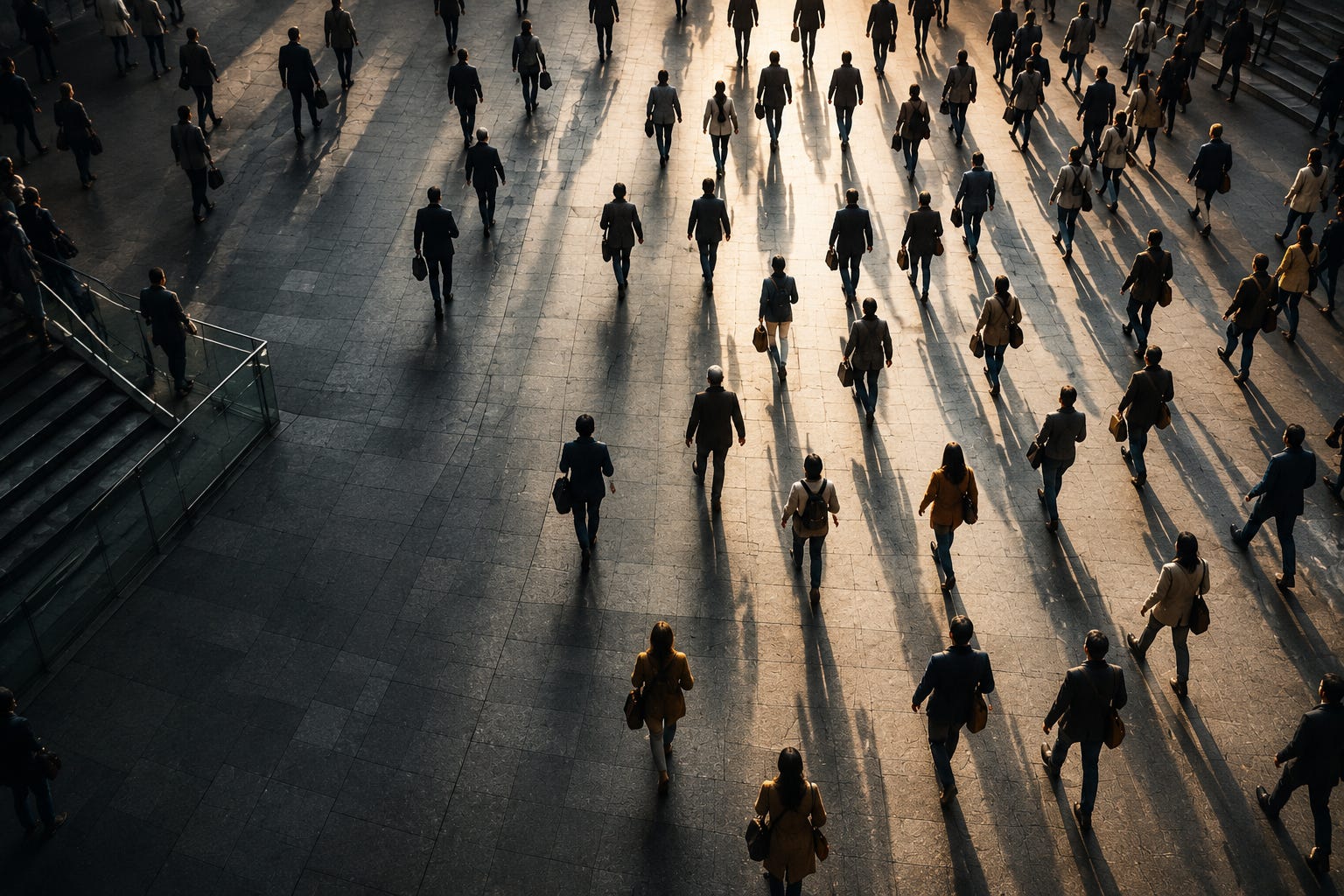
The Small Menopause Bubble
This is the realization I came to after a few recent conversations I’ve had with other menopause educators, including one earlier this week with The Matriarch: Unscripted , where we both said that we felt like “everyone” was talking about the menopause transition.
After all there are podcasts, Substack posts, blogs, YouTube channels, webinars and even the rich and famous talking about it. So do we need more voices? The truth is, those of us talking about this on a regular basis do live in a bubble.
My social media feed is full of posts about the symptoms, treatments, the pros and cons of various therapies. What exercises to do, what food to eat, what exercises not to do, what food not to eat. I write about it, and my readers comment. It’s a bubble.
Much of it I have curated so that I hear from valued resources, those grounded in fact and science. It has taken me a while to establish who those voices are and why I should rely on what they are saying.
Whose Isn’t Hearing it?
The conversation hasn’t reached enough women yet. There is still a lot of work to be done. So the quick answer is yes, we need more voices talking about this.
But are all women hearing it?
I wonder whose stories aren’t making it into those reports, podcasts, webinars, social media posts and workplace discussions? Could it be the women who have neither the access nor the time to consume that media?
The same women who don’t have the means or time to access the care that they need? According to U.S. labor data, about 7 in 10 jobs do not require a four-year degree for entry.
That made me wonder about the women we rarely hear from. The women working shifts, serving customers, caring for patients, stocking shelves, driving buses, cleaning rooms, processing orders, and doing a thousand other jobs that don’t leave much time for webinars, support groups, or specialist appointments. Think about that woman who has to work two jobs to provide for her family. Or the woman not only caring for her own family but now caring for aging parents. Do these women have the time or even if they have the time, do they have the capacity to find this information.
Do those women have the time for that webinar at 2pm on a Wednesday afternoon? And even if they do have the time, do they have the energy? Do they have the necessary health insurance to connect with a menopause certified provider? Do they have the time to spend on Google, Reddit, or other places looking for things that match the symptoms they are experiencing?
There Is More Than Just The Numbers
Of course it isn’t just those women who aren’t receiving the message. Several surveys and reports point to the lack of awareness among women in general, one conducted in 2020 showed that 44% of women were unaware of perimenopause until they started having symptoms, another found that of 3000 women aged 40-65 half were unaware of the term perimenopause altogether, and another conducted in 2025 found that only 15% of women surveyed felt adequately informed about perimenopause - meaning a staggering 85% did not.
Those numbers are revealing, but they really only show part of the picture. Women whose responses are in surveys are the women who had the opportunity to respond to them. Social Media conversations reach the people on those platforms, podcasts about menopause reach those already looking for the information. Even my own writing only reaches those people already interested in the topic. That’s not to say that surveys, studies, reports, webinars and podcasts are bad things or unneeded, they definitely are. It’s just that each of those channels reaches the audience it is generated for. Is there an audience of women not being reached because the channel to reach them hasn’t been built yet?
What is the impact of this gap? We find women who “normalize symptoms” as “getting older”. The consequences of that are that there is unnecessary suffering, relationships are impacted, workplaces are impacted, and there becomes a general sense of “this is just how it is now”.
If many women don’t recognize perimenopause when it starts, and most women don’t seek medical help for symptoms (see last week’s post on that), how many are navigating this transition largely on their own?
Perhaps the measure of success isn’t how many more podcasts, webinars, social media posts and workplace initiatives there are, Perhaps it’s how many women who currently know nothing about perimenopause eventually recognize themselves in the conversation.
The bubble isn’t the problem, forgetting it exists is.
Want to add to the conversation. Leave a comment. I reply to them all.
This substack runs on copious amounts of tea. If you’d like to support it, you could always buy me a cuppa.
I live in this same bubble! And no, women in midlife don't have the time or the energy to make the 2pm webinar on what is supposed to "fix" them. Or they think they have the time and sign up for the webinar, and then forget about it because of brain fog (or they are overwhelmed dealing with 10 other things). Plus, many women don't have access to certified menopause practitioners so they turn to chatbots for answers out of desperation, which is not the best strategy because a chatbot can't screen for other diseases that may overlap with menopausal symptoms.
I agree that it's wonderful that menopause has been brought to the forefront of many conversations, but I think opening the conversation to include younger women (including our daughters) is where the real shift will eventually happen as menopause will be hopefully be normalized as a life stage like pregnancy, and there will be easy access to treatment for all women.
This is such an important reminder, Simon. Bravo to you for shining the spotlight on the work that still needs to be done!