

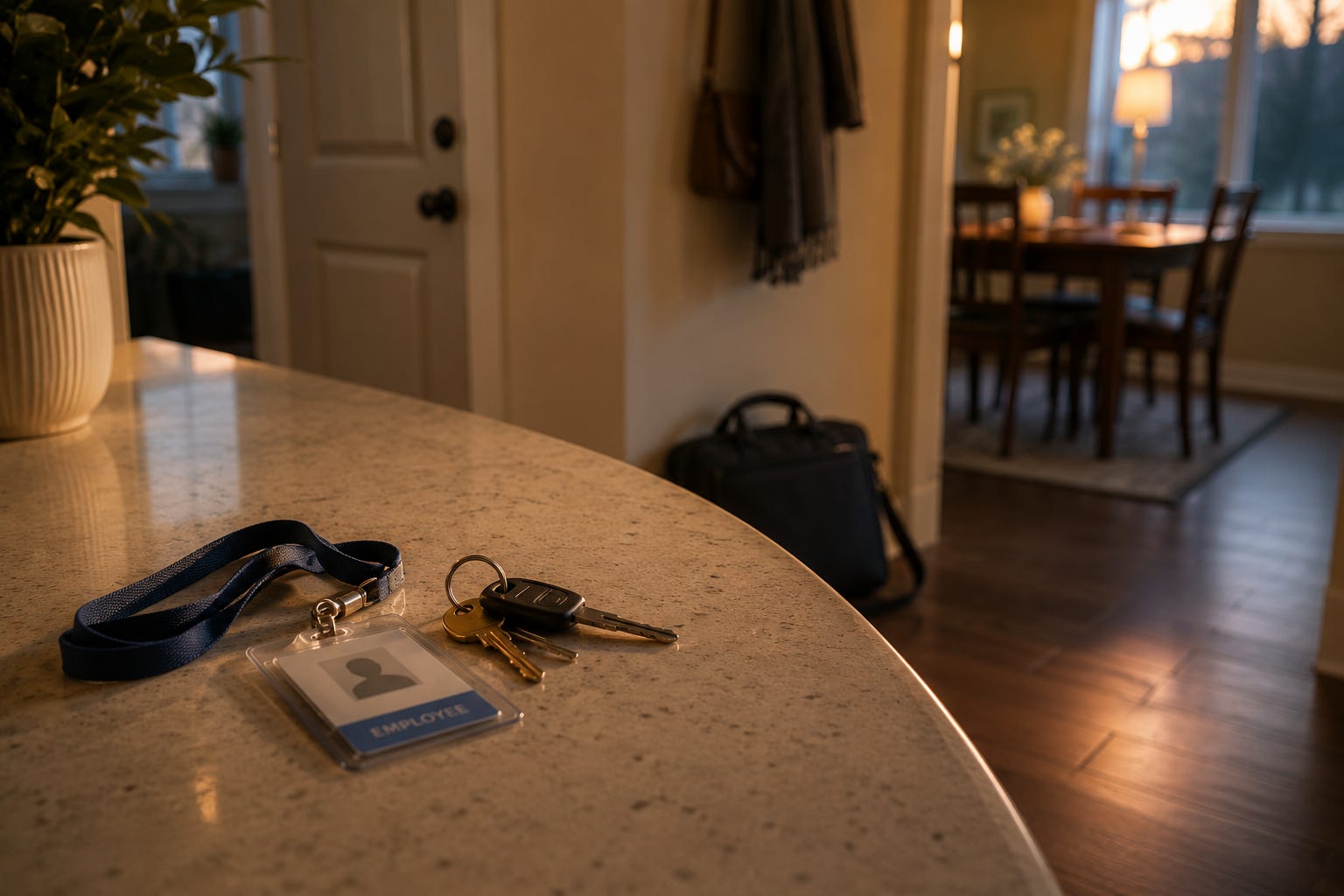
When we hear that menopause changes careers, most of us think about promotions, reduced hours or leaving work altogether. We rarely think about what happens when those decisions come home.
The Big Number
In a 2023 study published in Occupational Medicine 35% of women reported that their career decisions were impacted by menopause symptoms.
That number, more than 1/3rd, is large enough to change the workplace and relationships.
A woman who comes home exhausted, who perhaps has less patience because she has been masking symptoms all day at work may well be a very different person than the one who left the home that day.
Beyond the symptoms themselves there is the anxiety of what those symptoms might mean for the household, maybe a reduction in hours, leading to a reduction in pay. They may have guilt about not being able to “perform” the way they used to. A job that was a passion can become a burden.
All this happens invisibly. Their partner sees the end result, they don’t see the burden carried through the workday.
He doesn’t see how brain fog leads to her forgetting a common expression, one that was used daily before, suddenly slipping her mind. He doesn’t see the hot flash that happens in the middle of a presentation, or when helping a customer locate something in the store. The irritability caused by ongoing sleep disruption. This is all happening away from home and yet it impacts it.
“It Was Fine”
What the partner experiences is someone who responds with “it was fine” when asked how their day went. He experiences a partner who has less patience, who is more irritable and he can’t connect the two experiences when he was told “it was fine”.
This is the disconnect. The impact on the relationship. It isn’t influenced by work, it is shaped by the effort needed to get through the work day.
Coming back to the same study - Over half of the respondents (57%) disagreed or strongly disagreed with the statement that there was good awareness and support for employees affected with menopausal symptoms among management. With that type of work environment is it any wonder that she is trying to mask her symptoms? And if that has been the tone of her day it is no surprise that she is exhausted before her evening has even begun.
Home is where she can stop masking, and in fact is somewhere she is most likely to stop masking at all. An uninformed partner may assume the relationship itself has become the problem, when in reality they’re seeing the cost of everything it took to get through the day. Maybe they will take it upon themselves to try and fix the relationship. Those conversations that turn tense, that seem to take on a heavier meaning than they are meant to, those aren’t necessarily a relationship issue, sometimes they are simply a need to recover.
Looking In The Wrong Places
The man may be looking in the wrong place for answers. Instead of looking for answers in the relationship and the home, a better place would be the time spent away from the home. Getting past the “It was fine” and creating a space where the true story can be told. This takes courage from both partners, for one it takes the time to sit and listen to what their partner has to say, and to believe what they are told. For the other it takes the courage to step away from all they are carrying and know that they can unburden themselves.
That is not to say that support is one way or that there is only one experience happening. Both partners are experiencing the menopause transition at the same time, just from very different perspectives. The real work is done in closing the gap between those two perspectives.
Those 35% of women, making decisions about their careers have an impact on the workplace, without doubt. But those decisions don’t stay there. Beyond those decisions is a world outside of work. The personal. And that personal space has to adapt to the changes as well. Maybe that is going to lead to tough financial decisions, cutting back or changing plans. Beyond the physical there is the mental and emotional work that has been performed perhaps for decades, that now needs to be redistributed.
Perhaps it’s time we stop treating work and home as two different stories.
They are the same story happening in two different places.
Want to add to the conversation. Leave a comment. I reply to them all.
This substack runs on copious amounts of tea. If you’d like to support it, you could always buy me a cuppa.
Another great piece, Simon. You shine a light on two things that I don't think get enough attention - how menopause impacts women in the workplace and how that then impacts what happens when women return back to the home. I love that you remind us that this isn't two separate issues, rather "They are the same story happening in two different places." Bravo!
Fascinating data and great long-form piece, Simon. I see women struggling with brain fog in my coaching practice and get to hear as we coach how terrifying those moments can feel. Their replay of those moments sounds seriously similar to how my elderly mother (aged 83) reflects on losing the occasional word and her mounting frustration with that.
Women in menopause who must present to large or important audiences and find their words evading them spiral into panic, embarrassment, and then deep worry and self-judgment afterwards.
What seems to help is reminding ourselves that others have these moments too, like those communicating in a second language. Or native English speakers who love jargon can tangle themselves into confusion and forget their point completely.
Also, it's not the moment, it's the rebound from the moment that others remember, meaning how we internalize the moment. Also, taking a moment to pause, count to three; and then say something gentle like: the word has gone. But here's a recast on that sentence.